


Create the journal entry with date, details, debit, and petty cash credit amounts. Banks, investors, and regulators rely on double-entry records to assess financial health. SMEs using single-entry or informal records often struggle to secure financing. Because of the two-fold or duality effect of transactions, the total effect on the left will always be equal to total the effect on the right.
- Double-entry bookkeeping also serves as a foundation for producing essential financial statements, such as the balance sheet and income statement.
- Obviously, single-entry accounting is much simpler than double-entry, but it’s also much less accurate.
- For small sole proprietorships or businesses with minimal financial activity, the complexity of double-entry bookkeeping may outweigh its benefits.
- Organize your accounts into a chart that outlines the account types so it’s easier to record transactions and generate reports.
What is the double-entry system in finance and accounting, and how does it work?
If your business buys, sells, or holds physical inventory or owns major assets like equipment or vehicles, you’ll want to track how those values change over time. With double-entry accounting, you can easily track your assets, monitor depreciation, and stay on top of the cost of double entry accounting goods sold (COGS). Managing payroll involves various expenses, tax withholdings, and liabilities. A double-entry system helps you stay compliant and ensures your wage-related accounts stay balanced. Understanding the difference between single- and double-entry bookkeeping can help you manage your business’s finances better. Both methods track financial transactions, but they operate quite differently—and the right one depends on your business’s needs.
Free Course: Understanding Financial Statements
You’ll also be able to identify the profitable aspects of your business, and the ones that are less so. By applying the Double-Entry System in Finance and Accounting, businesses maintain financial accuracy, ensure compliance with accounting standards, and make informed financial decisions. The next section will explore its advantages and why it’s essential for businesses. The double entry is based on the debit and credit accounts of the transaction.
C. Rule 3: Debit Expenses and Losses, Credit Income and Gains
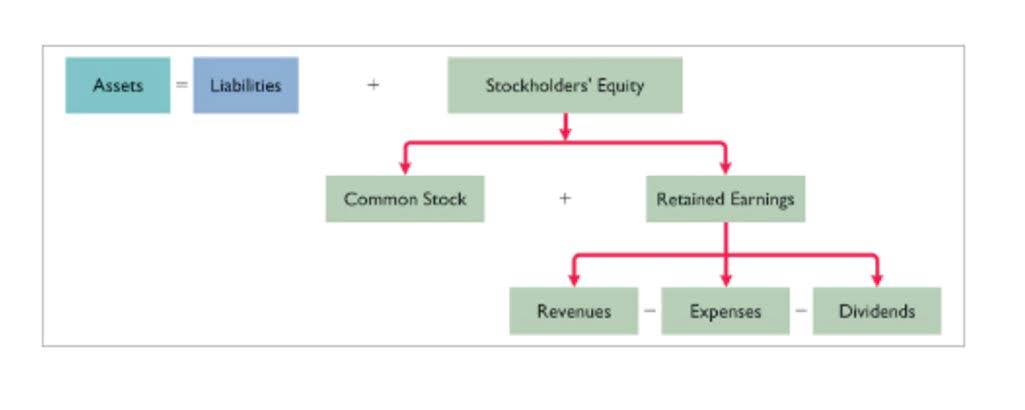
By implementing the Double-Entry System in Finance and Accounting, businesses can maintain financial stability, prevent mismanagement, and make informed strategic decisions. The next section will explore common mistakes businesses make when using this system and how to avoid them. Double Entry Bookkeeping is a standardized accounting system wherein each and every transaction results in adjustments to at least two offsetting accounts. The equation must always be balanced, meaning that every transaction will impact at least two of these categories. This single-entry bookkeeping is a simple way of showing the flow of one account.
- There are also apps that can automate various aspects of the process by syncing with your point-of-sale, bank, or other systems.
- Double-entry is an accounting system thatrecords a transaction in a minimum of two accounts.
- Additionally, the structured approach of double-entry accounting facilitates performance evaluations across various departments or projects.
- To maintain the integrity of double-entry accounting, regular reconciliations and reviews of accounts are essential.
- Once you’ve posted all your journal entries to the general ledger, the next step is to prepare a trial balance.
- Double-entry accounting provides a holistic view of a company’s transactions and a clearer financial picture.
Double-Entry Accounting

The deferral will be evidenced by a credit of $1,000 in a liability account such as Deferred Revenues or Unearned Revenues. Revenues earned outside of a company’s main business activities are referred to as non-operating revenues or as other revenues. For example, the interest earned by a retailer on its idle cash balances is part of non-operating or other revenues. At the end of the accounting year, the balance in each of the accounts used for recording operating expenses will be closed in order to start the next accounting year with a zero balance. At the end of the accounting year, the balance in each of the accounts for recording operating revenues will be closed in order to start the next accounting year with a zero balance. Accrued Expenses/LiabilitiesUnder the accrual method, the amounts in this account are owed but have not yet been recorded in Accounts Payable.
Single-entry vs. double-entry accounting meaning
Ensuring the accuracy of financial records is paramount in double-entry accounting, as it directly impacts the reliability of financial statements. Accurate records provide a true reflection of a company’s financial position, enabling stakeholders to make informed decisions based on trustworthy data. Understanding double-entry accounting is easier when illustrated with practical examples. One common transaction is when a business purchases office supplies for cash. The features of a double entry system include accuracy, completeness, and transparency. This system ensures that every transaction is recorded accurately and completely, providing a clear audit trail that can be used to track the flow of transactions.
Financial Management: Overview and Role and Responsibilities
Under the accrual basis of accounting, the matching is NOT based on the date that the expenses are paid. As we had discussed earlier, revenues cause stockholders’ equity to increase while expenses cause stockholders’ equity to decrease. Therefore, a positive net income reported on the income statement (which is the result of revenues being greater than expenses) will cause stockholders’ equity to increase. Let’s assume that Servco Company receives $4,000 on December 10 for services it will provide at a later date. Prior to issuing its December financial statements, Servco must determine how much of the $4,000 has been earned as of December 31.
- The debits and credits are tracked in a general ledger, otherwise referred to as the “T-account”, which reduces the chance of errors when tracking transactions.
- The company was able to raise $1 million in cash, reflecting an “inflow” of cash and therefore a positive adjustment.
- This is where each account, cash, accounts receivable, sales revenue, utilities expense, and so on, gets updated.
- Accumulated DepreciationAccumulated Depreciation is known as a contra asset account because it has a credit balance instead of a debit balance that is typical for asset accounts.
- Such measures help prevent errors and fraud, ensuring that all financial activities are accurately captured and reflected in the accounting system.
- If you don’t use double-entry accounting, your receivables will increase but you’ll be overstating your inventory.
- Assume that Alpha Company buys $5,000 worth of furniture for its office and pays immediately in cash.
This proactive approach to financial management is vital for maintaining operational stability and ensuring that obligations are met promptly. One effective method for maintaining accuracy is through regular reconciliations of accounts. By comparing internal records with external documents, such as bank statements, discrepancies can be identified and corrected promptly, fostering confidence in the financial reporting process. The fundamental premise of double-entry accounting is that it provides a more accurate representation of a company’s financial situation by tracking both the sources and uses of funds. This dual recording helps to prevent errors and omissions, as discrepancies can be easily identified through the balancing of accounts.
- First of all, ABC’s cash assets must be credited $1,000 since the cash has decreased by that amount.
- If something valuable comes into your business (like inventory or cash), you debit it.
- One of the main features of double-entry bookkeeping is that it provides a complete record of all organizational transactions.
- This entry increases both assets (cash) and revenue, showing the impact of the sale on financial health.
- Small businesses often benefit significantly from double entry bookkeeping.
B. Risk of Errors Despite Controls
This is because this bookkeeping method provides a strong and structured process to account for your business’s finances. While it may look like your business is $20,000 ahead of where it initially started at the beginning of the month, this table doesn’t tell the full picture. You still have $30,000 in liabilities, which you would need to pay back to the bank with interest. Accounts Receivable Outsourcing In an ideal world, assets amount to a higher sum than a company’s debt or liabilities, with the difference contributing to company equity. Equity constitutes the dollar value of a stake in the company, whether it’s a small business or a sprawling corporation with many different stakeholders. Financial analysis is essential for strategic planning and decision-making.